Scroll down. You'll follow one untrusted input — from a repository you point us at, through a sanitised codebase, across every linked repo, into a signed verdict, and out to a fix your developer applies in minutes. Every frame below is the real product.
Quaestor runs as a multi-tenant cloud with hard, server-enforced isolation — or single-tenant inside your own private cloud. Tenancy is derived from your session; a foreign id returns nothing.
Four least-privilege roles: developer and defender scan and work cases, decision-maker signs off, admin runs the team. SSO via Entra ID / OIDC when you want it.
Your code and findings are isolated to you — no tenant can ever read another's, in cloud or on-prem.
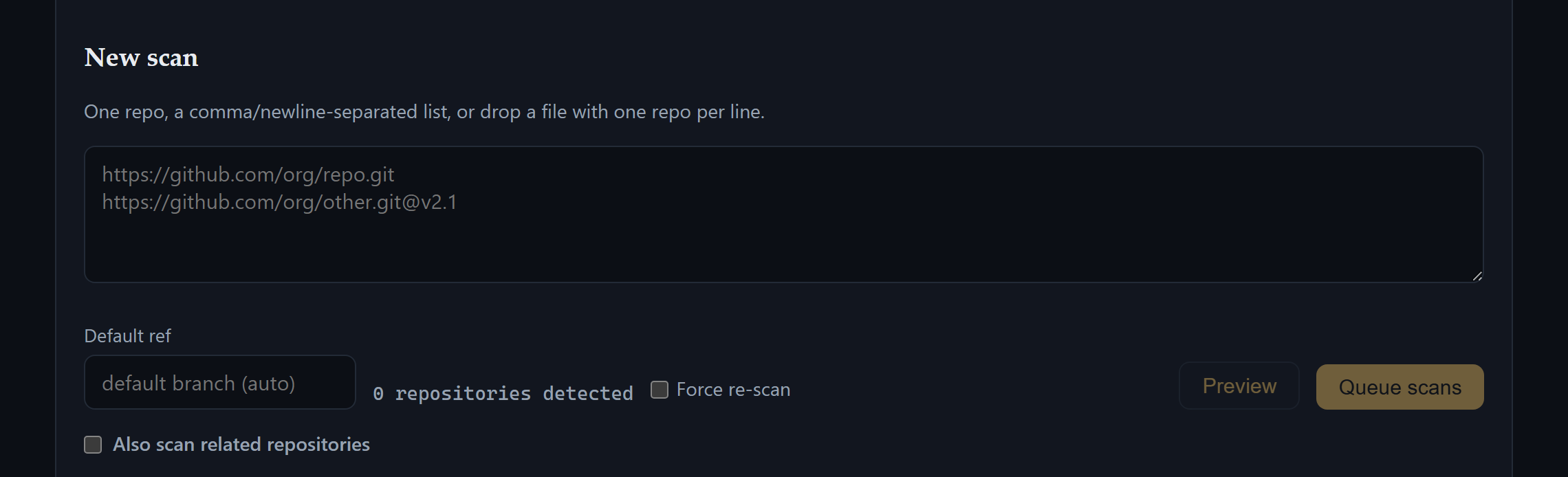
A GitHub URL is all Quaestor needs — one, a list, or a whole file. Each repo is sanitised (secrets stripped, sealed) before a model reads a line, and “Also scan related repositories” fans out into linked repos.
Paste a URL and walk away. The model runs read-only — no writes, no shell, no network — and never sees your secrets.
Quaestor maps entrypoints, sinks and reachability, then follows untrusted input from where it enters to where it turns dangerous — across files, and across every repository yours depends on. A tainted value that crosses a package boundary is tracked into the linked repo, and back.
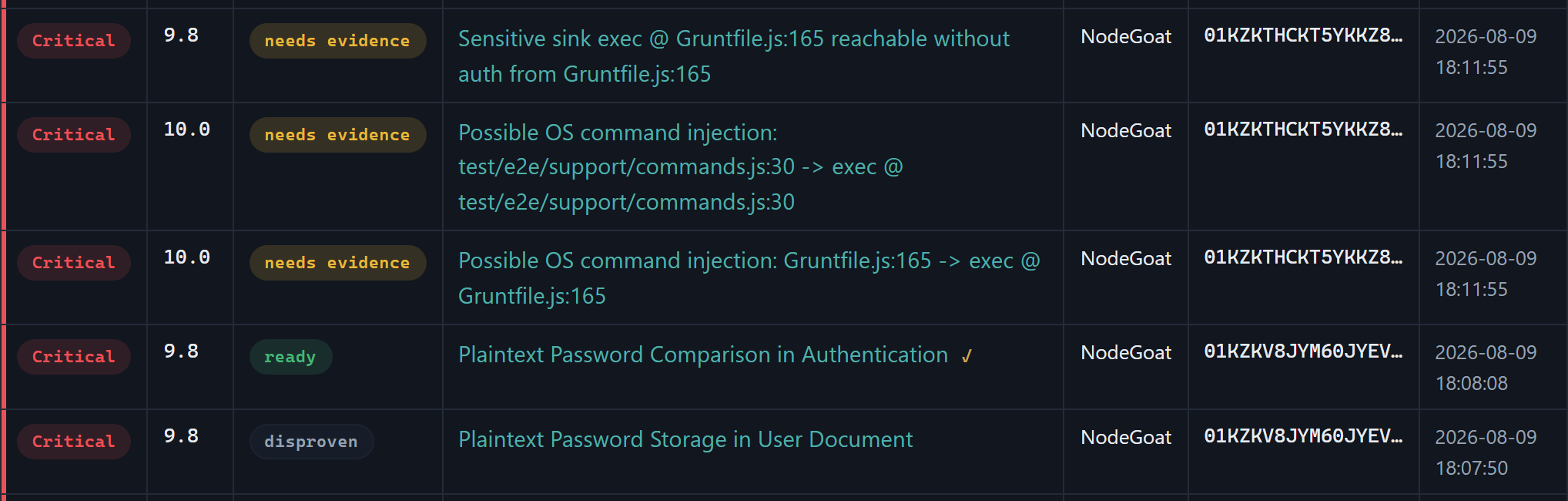
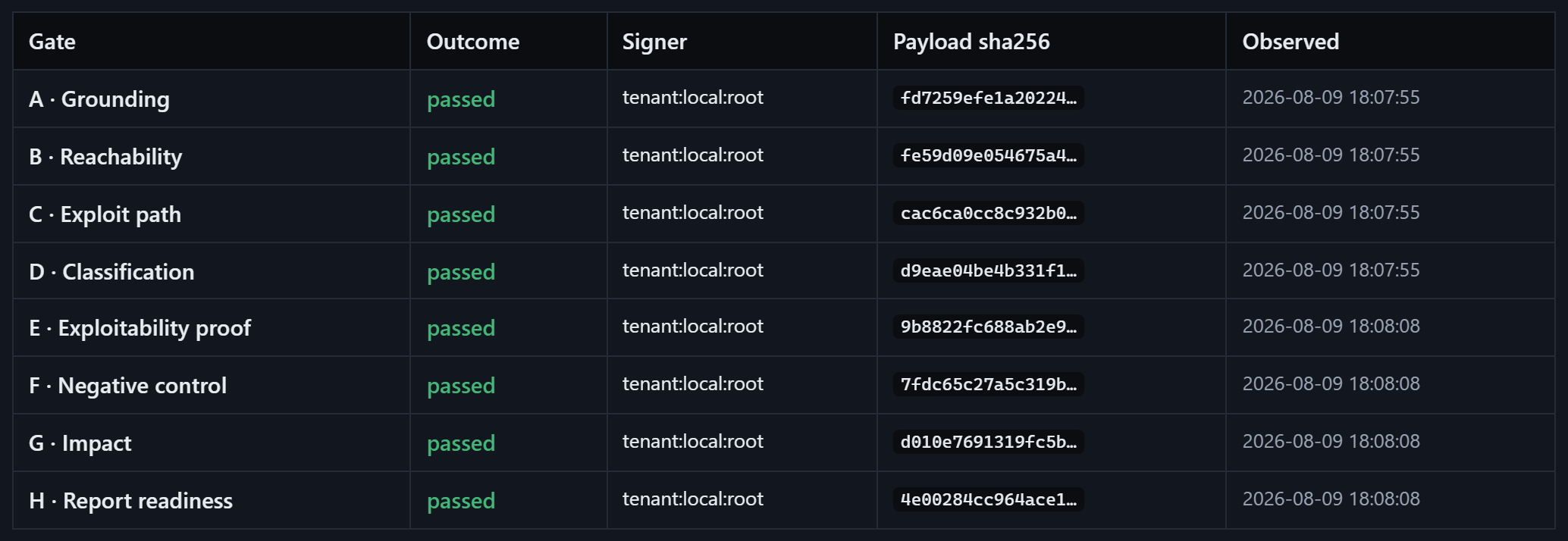
Each candidate walks eight gates. What survives is signed; what can't is refused — disproven or needs-evidence, never dressed up. A real registry from an OWASP/NodeGoat scan:
False positives are caught for you, not dumped on you — triage stops being a full-time job.
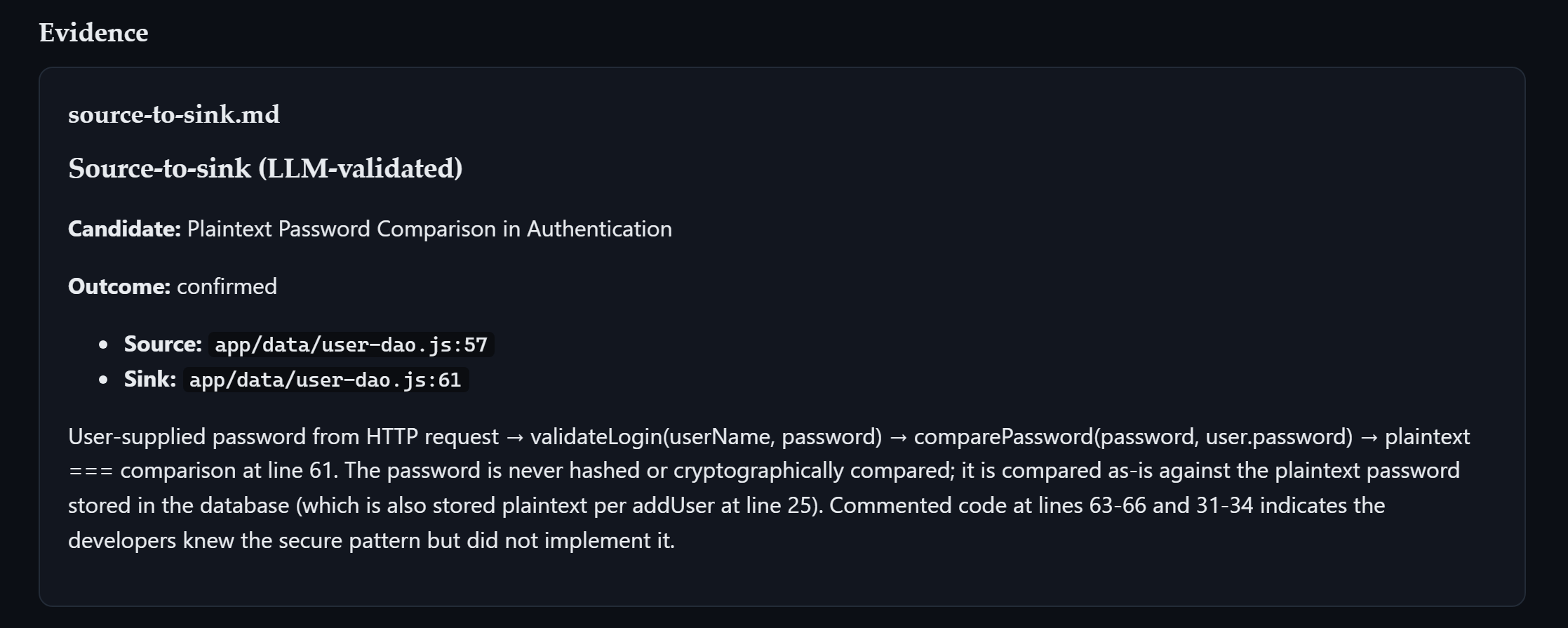
A signed case hands the developer the real signed A–H ledger and the exact source→sink path, plus an AI-drafted fix scoped to the vulnerability. Apply, re-scan, and Stage ∞ auto-closes the case with a signed retest.
// app/data/user-dao.js- if (received === user.password) { // plaintext compare+ if (await bcrypt.compare(received, user.password)) { return authenticate(user); }
No wall of maybe-bugs, no guessing the fix — the proven path and an AI-assisted patch, closed in minutes.
The same signed evidence serves the person who fixes it, the person who owns the portfolio, and the person who signs it off.
Every case opens to a proven exploit path — source, sink, and the trace between them — so you fix the bug, not a hunch.
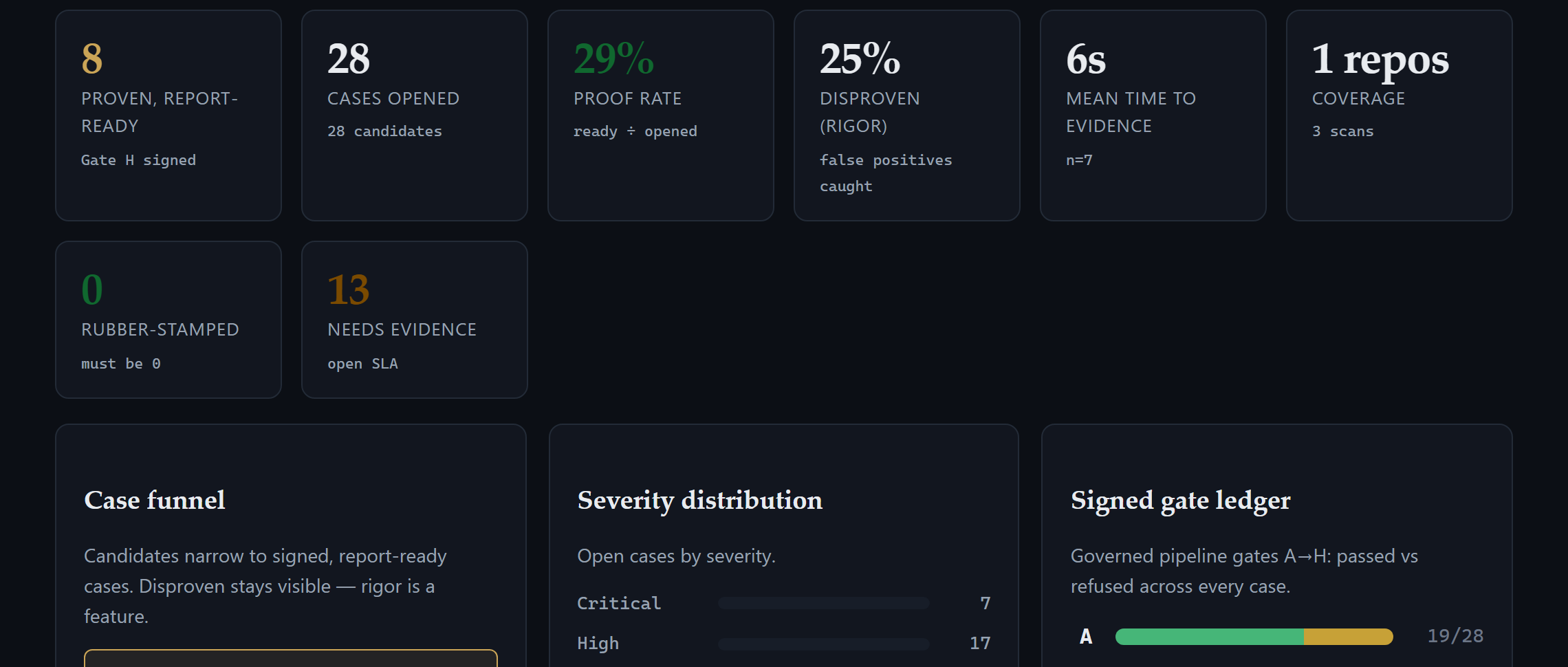
A rigor surface competitors structurally can't produce: proof rate, mean-time-to-evidence, and the number that matters most — how much you disproved.
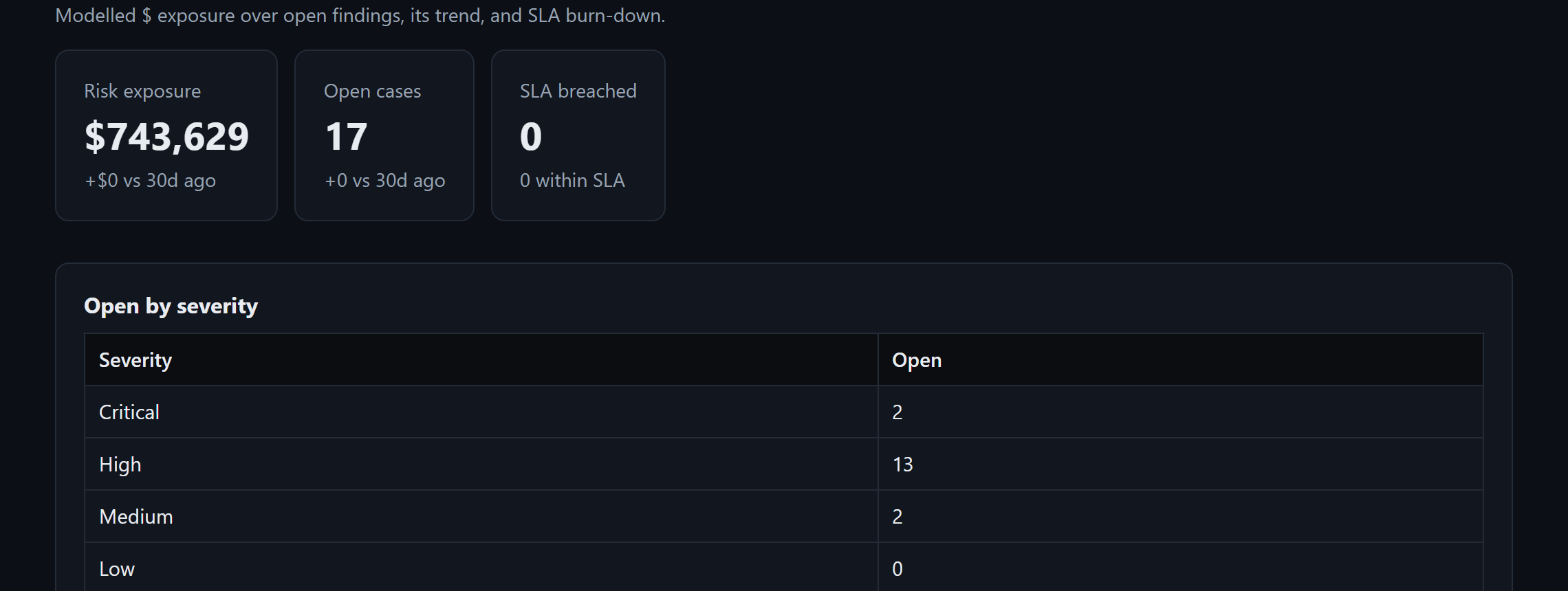
Quantified risk posture and a board-ready pack where every number traces to a signed verdict — not a spreadsheet you have to defend on trust.
Point Quaestor at your code and get back a dossier you can hand to an engineer — or an auditor. Enterprises and growing teams book a demo or request access below; we respond the same working day.